A Guide to Pool Cleaning for Commercial Properties
A guide to pool cleanliness maintenance for residential, hotel, and commercial properties.
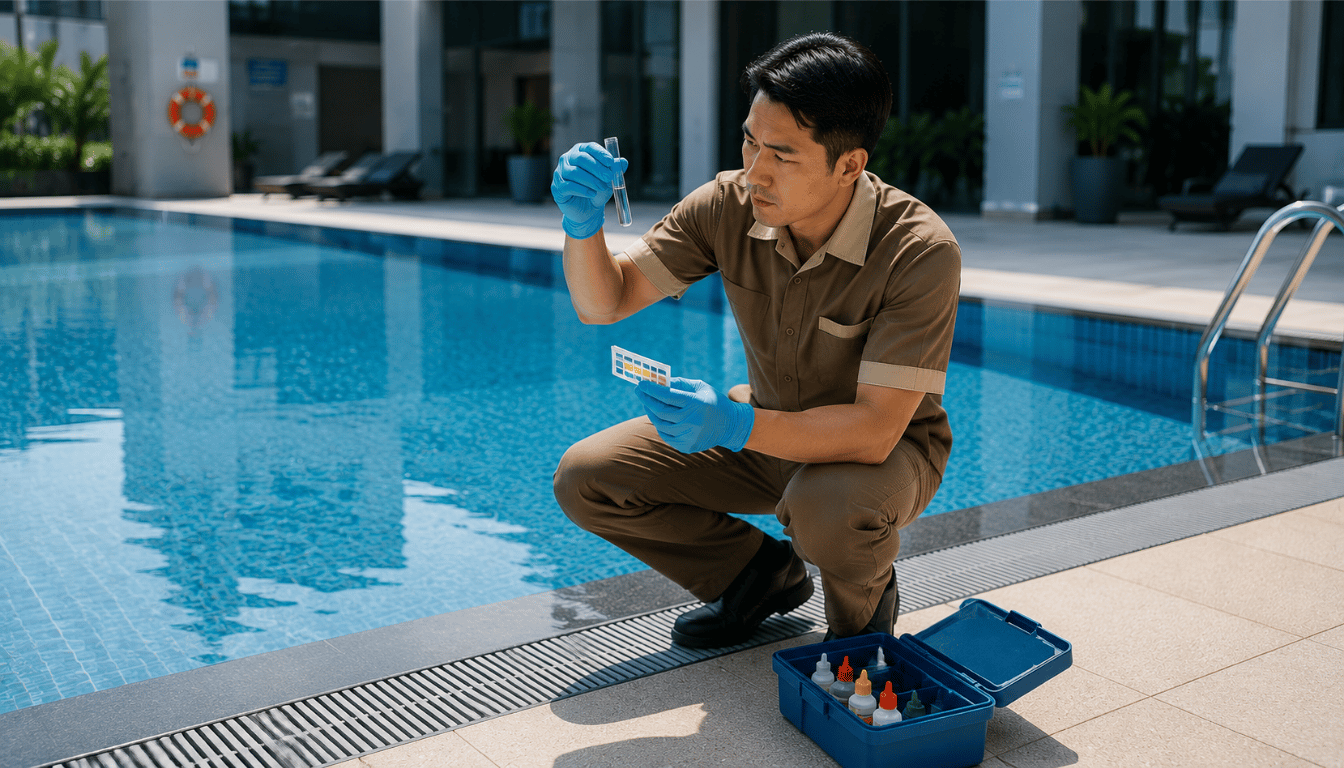
Commercial pool cleaning requires different handling from a private pool because of higher user volume, stricter water chemistry balance requirements, and surrounding areas like the deck and filtration system that also need routine care. Without a structured schedule, a pool risks turning cloudy, growing algae, or falling short of the hygiene standard residents and guests expect — problems that tend to compound quickly once they start.
1. Why Commercial Pools Need Different Care Than Private Pools
A pool at a commercial property — a multi-unit residential complex, a hotel, or a senior living facility — sees a far larger and more varied group of users than a private pool. Every user introduces sweat, lotion, cosmetics, and outside particles into the water, so the contaminant load on a commercial pool is much higher and needs more frequent chemical adjustment.
Beyond user volume, a commercial pool also generally operates nearly year-round without a long break, unlike a private pool used more sporadically. This keeps the filtration and circulation system working harder, which calls for more scheduled inspection and maintenance [Insert reference to the relevant pool water safety standard, e.g. local environmental health guidelines], since a system running continuously has far less downtime to absorb a missed maintenance cycle.
2. Core Components of Pool Cleanliness Maintenance
Commercial pool maintenance covers several interrelated components, not just scrubbing the pool walls:
- Water chemical balance — chlorine, pH, and alkalinity levels need routine checking to keep the water safe and avoid skin or eye irritation for swimmers. Unbalanced pH can also accelerate corrosion of metal equipment around the pool, adding a hidden maintenance cost beyond water treatment itself.
- Cleaning the surface and pool floor — brushing the walls and vacuuming debris from the floor helps prevent algae growth and sediment buildup that make water look cloudy. Corners and pool steps are usually the fastest spots for algae to grow, due to slower water circulation there, so they deserve extra attention during each cleaning pass.
- Filter and circulation system maintenance — a clogged filter reduces water circulation effectiveness, so it needs cleaning or replacement on a schedule matched to the filter type in use, whether sand, cartridge, or diatomaceous earth.
- Deck and surrounding area cleanliness — deck flooring, sun loungers, and seating areas around the pool also shape the overall cleanliness impression for users, especially since this area is where users gather before and after swimming.
Signs a Pool Needs Immediate Attention
Some signs that a pool needs treatment sooner than its usual schedule include water that looks cloudy even after filtering, walls that feel slippery from algae growth, an unusually sharp chlorine smell, or complaints of skin or eye irritation from pool users.
Safety Considerations Tied to Pool Cleanliness
Pool cleanliness can't be separated from user safety. Deck flooring that's slippery from algae or spilled water that isn't dried promptly risks causing a user to slip, particularly around the pool entry steps. Wet-floor warning signs and anti-slip mats at high-risk spots can help reduce this risk, and are also part of a responsible facility management standard that reduces liability exposure over time.
3. How TUM Clean Handles Pool Maintenance in Bogor
Method and Process Stages
TUM Clean, operated under the legal entity PT. Tunggal Utama Makmur and based in Sentul, Kecamatan Babakan Madang, Kabupaten Bogor, handles pool cleanliness maintenance for residential and hospitality properties across Bogor, Sentul, Ciawi, Cibinong, Cibubur, and Depok, including clients in the residential segment such as Darmawan Park. The process generally covers:
- Water quality testing to check chlorine, pH, and alkalinity levels before determining the needed chemical adjustment.
- Brushing walls and the pool floor to lift algae and sediment buildup, followed by vacuuming debris with a pool vacuum.
- Inspecting and cleaning the filter to make sure the circulation system is working optimally and no blockage is reducing filtration effectiveness.
- Cleaning the deck and surrounding facilities as the final stage, to make sure the whole pool area looks tidy and well-kept.
Maintenance frequency is matched to each property's pool usage volume — a pool at a residential complex with many residents, or a hotel with high visitor traffic, generally needs a more frequent schedule than a private pool with restricted access, and that schedule is typically fine-tuned after the first month based on how the water actually behaves.
Common Mistakes in Commercial Pool Maintenance
Some frequent mistakes that cause pool cleanliness issues include:
- Only adding chlorine without checking pH, even though unbalanced pH can make chlorine ineffective regardless of how much is added.
- Neglecting filter maintenance because the water still looks clear, even though a dirty filter can still gradually degrade water circulation quality well before that decline becomes visually obvious.
- No written schedule for water testing, so chemical adjustment only happens reactively once the water starts looking cloudy or smelling off, by which point user complaints have often already started.
- Ignoring deck cleanliness, even though dirt and sand from the deck can be tracked back into the pool via users' feet, undoing some of the work already done inside the pool itself.
4. Building a Pool Maintenance Schedule Matched to Your Property Type
An ideal pool maintenance schedule should factor in several elements below, rather than applying one uniform schedule to every pool:
- Daily user volume, particularly on weekends or during holiday seasons when visits rise significantly.
- Pool size and depth, since larger pools need more testing and cleaning time.
- Exposure to the outdoor environment, such as an outdoor pool that's more prone to dust, leaves, and direct sunlight.
- A history of user complaints about water clarity, odor, or skin irritation, which signals a clear need to adjust the schedule.
As a general illustration, high-usage pools such as those at multi-unit residential complexes or hotels generally need daily water testing and a thorough weekly clean, while pools with more restricted access can be scheduled less often [Insert specific frequency recommendation based on a site survey and user volume], since usage patterns can vary substantially even between similarly-sized pools in the same neighborhood. This usage-based approach also helps keep maintenance costs proportional to each property's actual needs. To get a pool maintenance schedule matched to your property, please Contact Us, or read Articles on specialist and project cleaning.
FAQ
Quick and Practical Consultation
Address
Darmawan Park, Jl. Babakan Madang No.99, Sentul, Kec. Babakan Madang, Kabupaten Bogor, Jawa Barat 16810
Google Maps